The War on Em Dashes
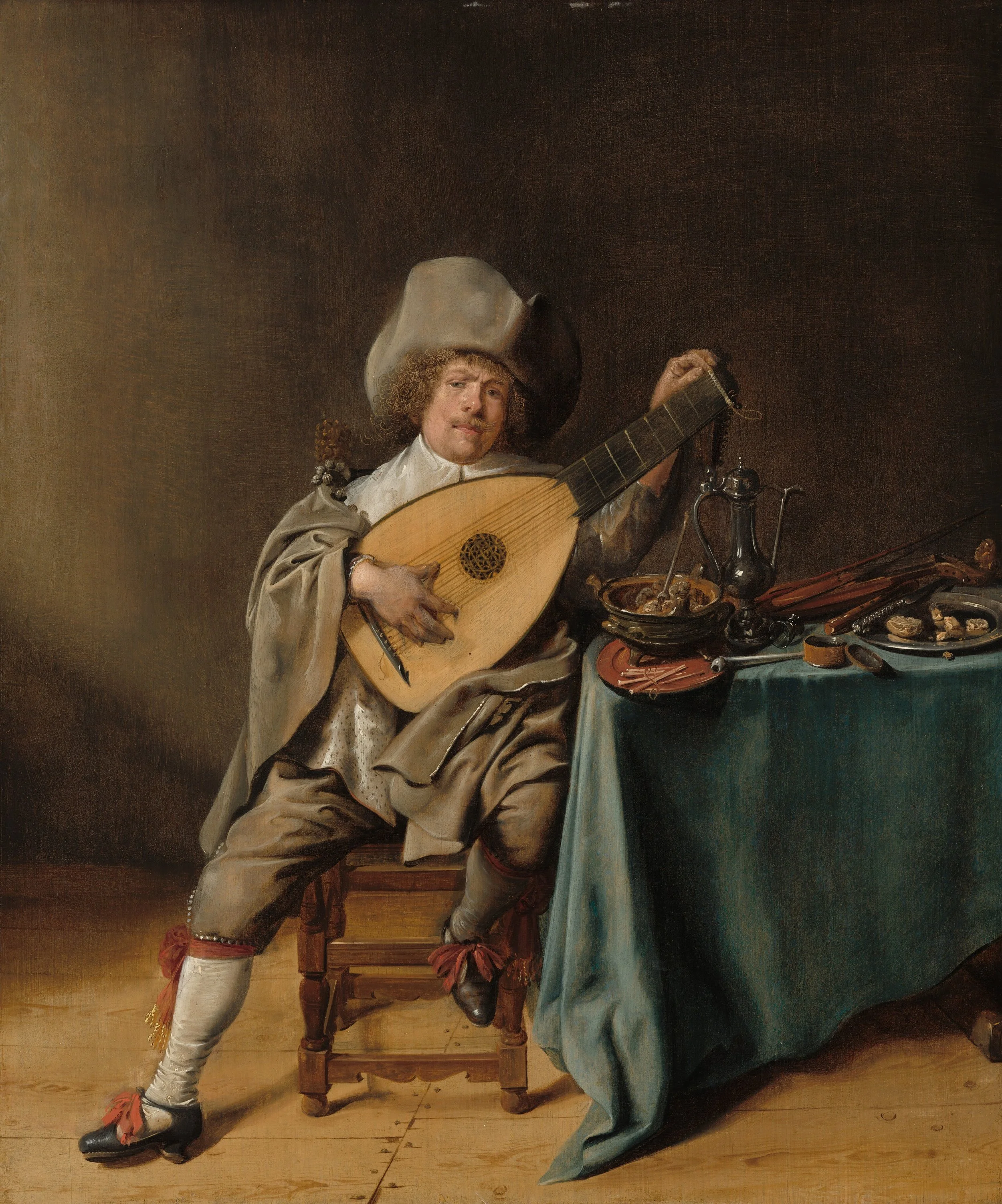
“Self-Portrait as a Lute Player” by Dutch painter Jan Miense Molenaer, 1637/1638
Article looks great. Remove em dashes.
If you’ll forgive a brief bio, I feel the need to justify myself before I begin. I have a decade and a half of experience as a professional writer in both the ecomm and marketing arenas. Before, during, and in the crevices of that work, I’ve reflexively been a writer of poetry, calling myself a “grassroots poet” as a hopeful means of confusing people into thinking I know what the hell I’m doing. My poems have been published, framed alongside visual art, and even printed in 200-point vinyl letters to be stuck on a gallery wall, each of which was momentarily validating. Really it’s a freeform creative expulsion, for which poetry is the only term that could possibly be workable. As such, the em dash holds my work together.
In poetry, the em dash allows me to go on for far too long, stringing multiple overlapping thoughts together in a single, eternal sentence, in an effort to convey how frenetic and desperate and subterranean my innermost emotions truly are. If every poem ever written boils down to the topics of existence, the ineffable, motherhood where applicable, and the mundane, so too do mine. And within the painful reality of human limitations, no other punctuation is quite as capable a vehicle for the attempt.
I’m not alone in this viewpoint. Here are six examples of em dashes in literature to help paint the picture.
In more straightforward modes of writing, and under the influence of a brand’s voice and tone, the em dash is an opportunity for a personal touch (read: a human touch). It makes room for syntactically correct self-interruptions, for clarification. It invites a conversational spirit, allowing the author to write similarly to how one might speak. As a teacher’s pet of abiding brand laws, I appreciate that this punctuation is a loophole that lets me be “me” even while upholding the guidelines. This is a significant part of what’s delightful about my job and keeps me coming back. As a ghostwriter, I’m able to use the em dash to be true to someone else, with different interjections, asides, and embellishments than I personally would use, adding an additional layer of satisfaction to my work. In case it needs to be stated, enjoyment of our pursuits is a critical component of what makes us succeed in them.
So, in my current freelance gig, ghostwriting articles for visual creators and social media influencers, I’m in crisis. As of 2024, my team is not only encouraged but expected to prompt ChatGPT to produce a first draft of our articles. (More on that at a later date.)
“Nice work. Remove em dashes,” is becoming my most common piece of feedback. The producers who are providing the feedback don’t have a suggestion for what punctuation they’d like to see in its place, they just know there’s no room in our emerging evolution of written culture for this elusive symbol. They believe, not wrongly, that ChatGPT has grossly overused the em dash. They argue that it’s a dead giveaway for AI’s involvement in the article’s creation. They would rather the piece be a little less compelling than leave this lexical smoking gun in the opening paragraph.
When I say “they” in the above paragraph, I’m referencing a specific team of marketing producers, but I confess that in my mind this small pool of young operations managers are representing all of Gen Z.
It seems my role on my team is the weird aunt who’s a holdover from the past; nobody understands why she’s here or she’s really related, but, they shrug, she brings margaritas (or consistently decent drafts) so they let her hang around. I’m the last living soul from pre-acquisition, unless you count the CEO and HR guy. Is this how every middle-aged professional feels when a post-layoff changing-of-the-guard washes in the recent college graduates? Did Gen X writers balk at my early-career use of exclamation points, which, I insisted, were absolutely legitimate in work emails and nonfiction publications alike?
It’s not AI who uses too many em dashes, it’s woeful creatives burdened by the magnitude of living who are to blame. Or if it is AI overusing them, it’s something we have in common. My husband poses curiosity about whether this is yet another example of AI plagiarizing real writers’ work; after all, we did create ChatGPT in our image. Maybe he’s right. Regardless, em dashes are the drooping eyelids of my vocation, perhaps the first sign of my suddenly dated existence in my field.
I’m uncomfortable noticing myself feeling a kinship with the big, bad robot. I have a distinct softness for its dorky punctuation. Is this the type of existential crisis I’m supposed to be having about AI?
I don’t know the answer, so I’ll concede that there’s room for all manner of existential dread, friends—room for it all.
▲▼▲
What I used AI for in this post:
Nothing, this one was pure emotion.
